Monogram: A Personal Luxury You Should Add to Your Life

We are living through a strange moment in fashion, when logos no longer mean luxury. They may still mean access, taste, money, or a very cooperative credit card. A Hermès bag, for instance, certainly suggests connections and resources. But it does not necessarily prove a luxurious life. There is a difference between buying signs of status and inhabiting a life with texture, memory, and continuity. And one of the most underrated symbols of that difference is the monogram.
A monogram is discreet, personal, and almost stubbornly unfashionable in the best possible way. Two or three initials placed quietly on a shirt, a napkin, a wallet, or the lining of a jacket can say more than a loud logo ever could. It separates the world, rather brutally, into two camps: those who purchase visibility and those who understand belonging.
The Brief History of the Monogram
The art of the monogram has existed for centuries, even millennia, with traces found in ancient civilisations such as Egypt and China. But in Europe, the monogram became especially meaningful during the Middle Ages, when it was used as a seal of identity, authority, and distinction.
The word itself comes from the Greek mono, meaning single, and gramma, meaning letter. Early monograms appeared on royal seals, religious garments, precious tapestries, and objects connected to power or devotion. They were often worked in gold or silver thread, less as decoration than as a sign of presence.
During the Renaissance, embroidered monograms became more intimate. They moved from royal and religious contexts into domestic life, appearing on clothing, table linens, bedding, curtains, and household objects. A monogram could turn an everyday item into an heirloom. It gave fabric a family name, and objects a memory.
This is why the monogram still feels different from ordinary personalisation. It is not simply about ownership. It is about continuity.
How To Embrace Your Monogram Like Old Money
Luxury lives in details, but also in scarcity. That is the essential rule of the monogram.
I once knew a very rich man in Brazil who had his initials placed on everything, including his toothbrush. Although he came from an old family, he had somehow developed the emotional symptoms of new money. The lesson was clear: a monogram should not behave like a logo. It should appear with restraint, almost as if it was never intended to be seen by strangers.
The English, as ever, understand understatement. One initial, perhaps two, tucked somewhere private. Inside a wallet. On a signet ring. On an egg cup. Embossed on stationery that does not seem especially interested in being admired. The tone is not “This is mine.” It is closer to “This was always mine.”
Monogram On A Shirt
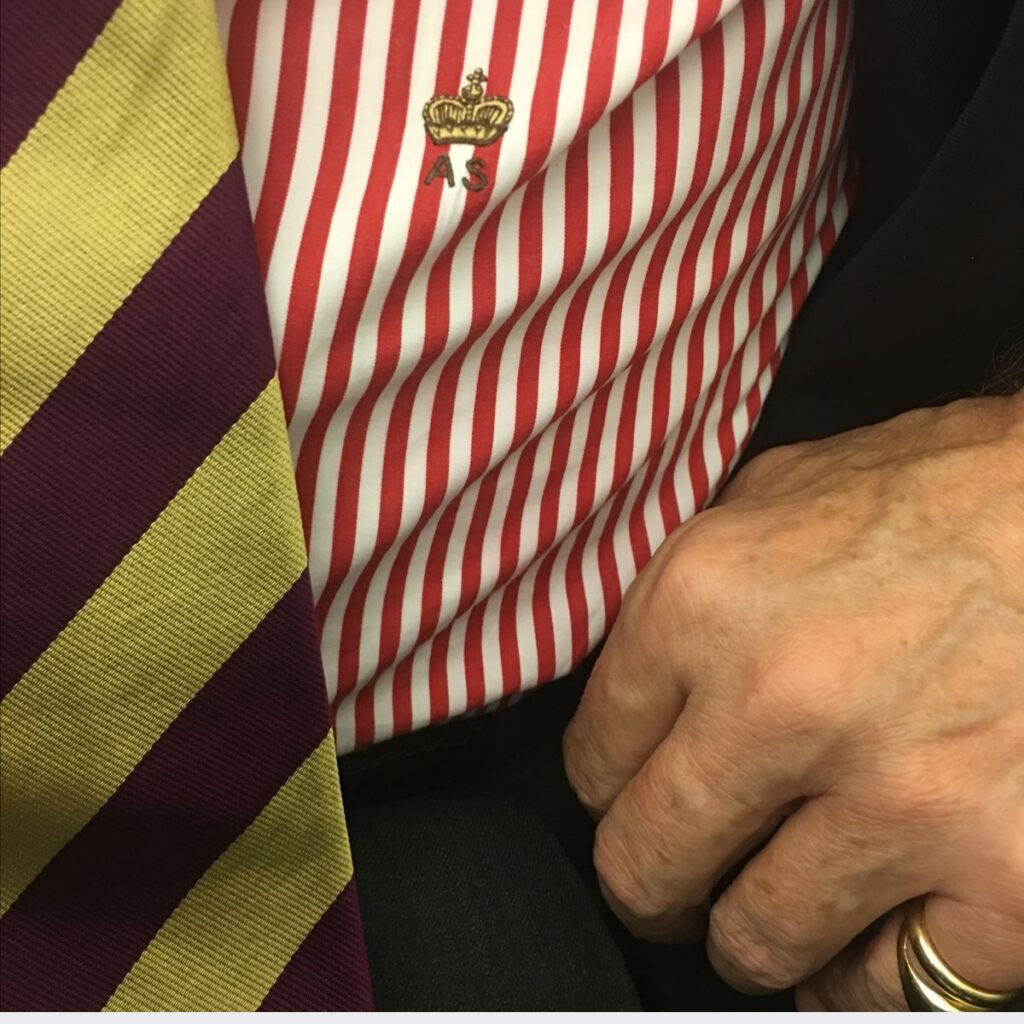
On a shirt, the most elegant placement is usually discreet: embroidered on the left side, around five centimetres below the bust. Not on the cuff, not screaming from the pocket, not behaving like a tiny aristocratic billboard.
In traditional European style, princes may embroider a closed crown above their initials, while counts may use an open coronet. For the rest of us, initials alone are more than enough. In fact, they are often chicer.
For bespoke shirts, Charvet
Monogram Inside Your Clothes
There is also something very couture about hiding beauty where only you know it exists.
Matthieu Blazy, Chanel’s creative director, has reminded fashion of the pleasure of interiors: the inside of a garment, the lining, the construction, the secret architecture of clothes. This is exactly where a monogram can become interesting. Embroider your initials inside a jacket, on the lining of a skirt, or at the waistband of a pair of trousers.
It is practical, too. You are far less likely to lose your clothes at the dry cleaner, which may be the most bourgeois sentence ever written, but still useful.
Boarding School Monogram Style
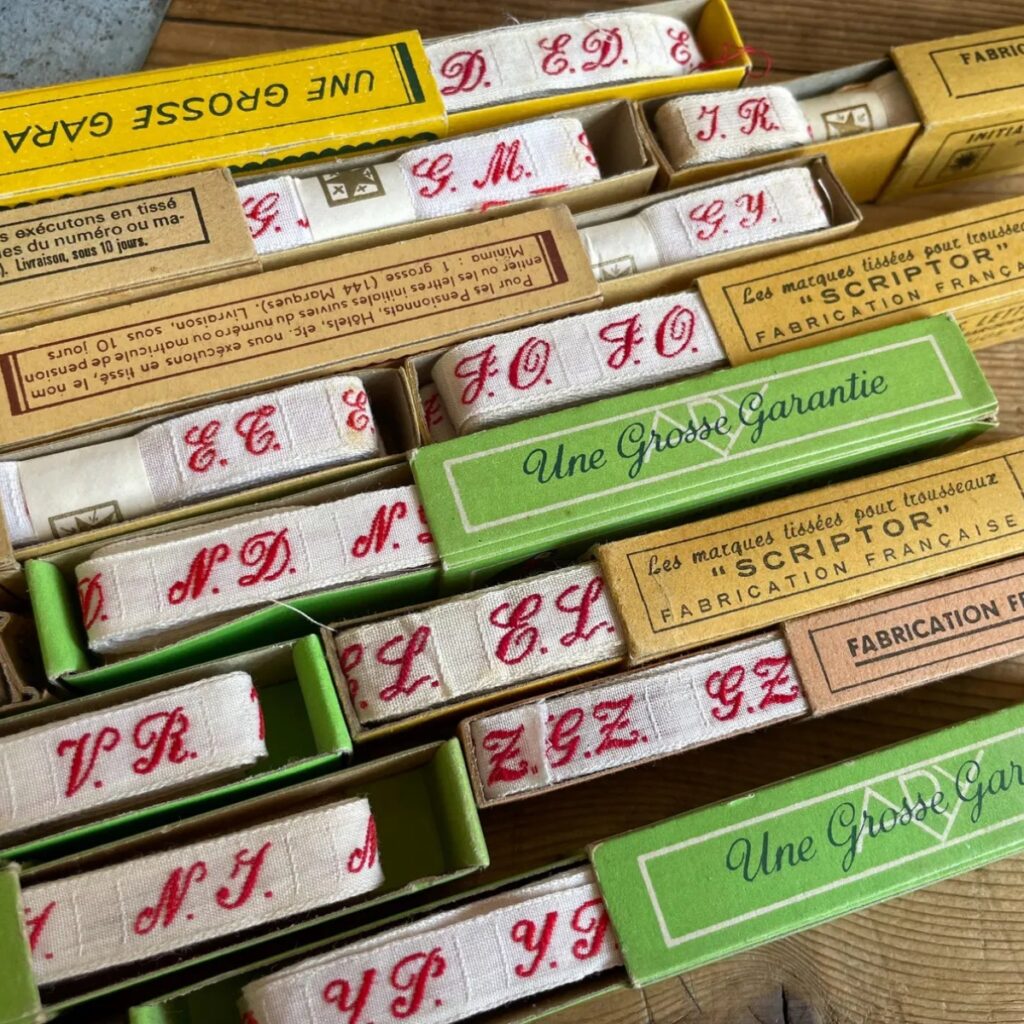
Anyone who has sent children to boarding school, or even just to a very chaotic summer camp, knows the truth: they come home with half their clothes missing and the other half belonging to someone else.
This is where the French laundry-label system becomes quietly brilliant. Small woven labels, sewn into everything from underwear to shirts and pyjamas, solve the problem without drama. It is not glamorous, exactly. But it is orderly, and order has its own charm.
Check these vintage laundry labels on Etsy: Sissidavril
Monogram On Table Linen And Bed Linen
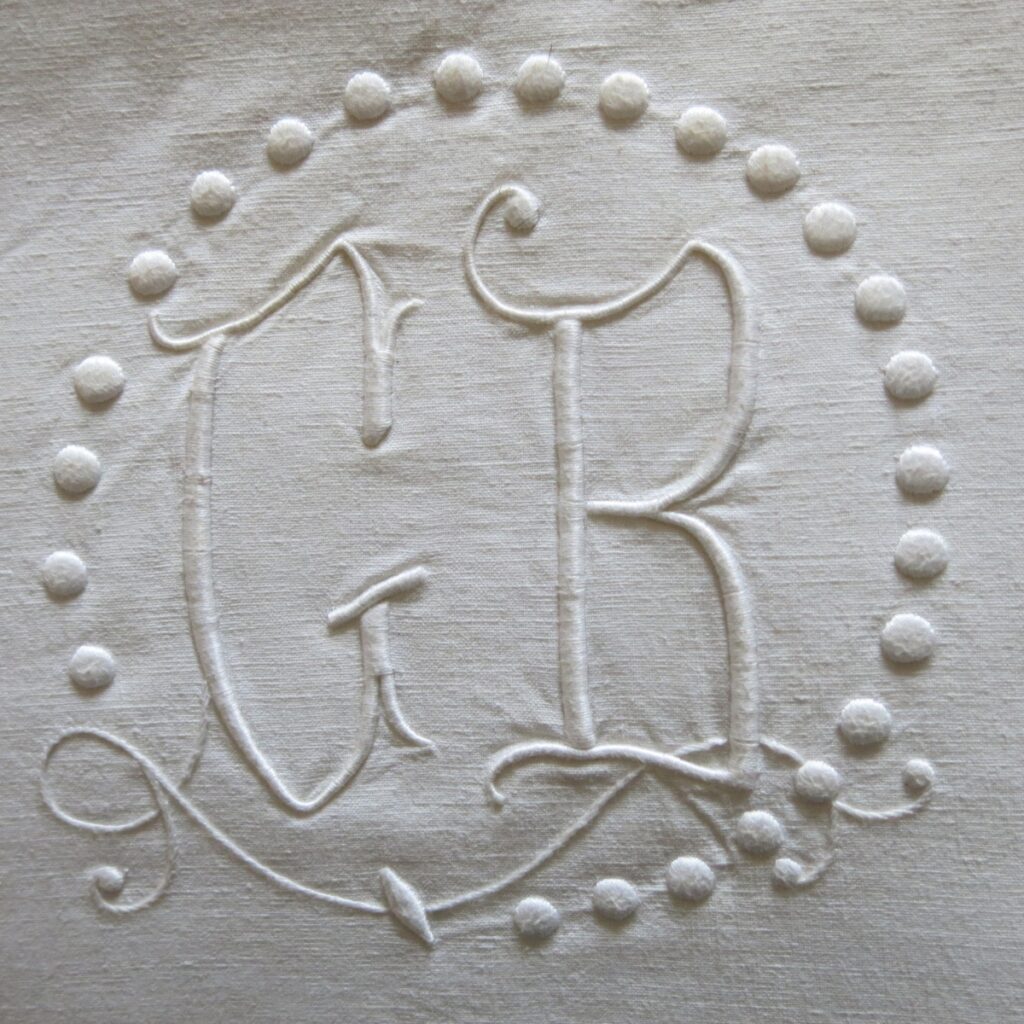
Table linens and bed linens are perhaps the most natural home for a monogram. A linen napkin embroidered with the family initials is not just chic; it speaks of inheritance, continuity, and tradition.
There is something moving about household objects that carry a name across generations. A monogrammed napkin suggests dinners that happened before us and dinners that may happen after us. It is domestic life with a memory.
Etsy again for embroidered napkins.
Monogram Is Not The New Logo
The most important rule is this: do not put your monogram everywhere.
Today, almost every brand offers personalisation. Suitcases, handbags, sunglasses, jewellery boxes, socks, phone cases, wash bags, cardholders — everything can be stamped, embroidered, embossed, or engraved with initials. This does not automatically make it elegant. Often, it does the opposite.
When a monogram becomes a logo, it loses its meaning. It starts to sound socially anxious, as if it were whispering, “Please notice how special I am.”
But the effect you want is much quieter and far more powerful. A true monogram does not ask to be admired. It simply suggests that your life has roots, rituals, and a future. It is not a performance of luxury. It is a small signature of belonging.
And perhaps that is why the monogram matters now. In a culture obsessed with visibility, it reminds us that not everything valuable needs an audience.
SHARE



