Inside the Queen Elizabeth II Fashion Exhibition at Buckingham Palace

A Wardrobe That Functioned Like Statecraft
The late Queen understood something that much of modern fashion has forgotten: clothes are not only self-expression. They are strategy. They can reassure, signal authority, create memory and hold a public image steady across decades. That is what gives the new exhibition Queen Elizabeth II: Her Life in Style its real force. What goes on display at Buckingham Palace is not just a royal wardrobe, but a masterclass in dressing for history. So intense has been the appetite for Queen Elizabeth II: Her Life in Style that the exhibition, originally scheduled to close on 18 October 2026, has now been extended until 18 April 2027 after organisers reported unprecedented demand.
That is the real intrigue behind Queen Elizabeth II: Her Life in Style, the new exhibition at The King’s Gallery, Buckingham Palace. With more than 300 pieces from the late Queen’s wardrobe, it is the largest exhibition ever devoted to her fashion, and more than half of the items have never been exhibited before.
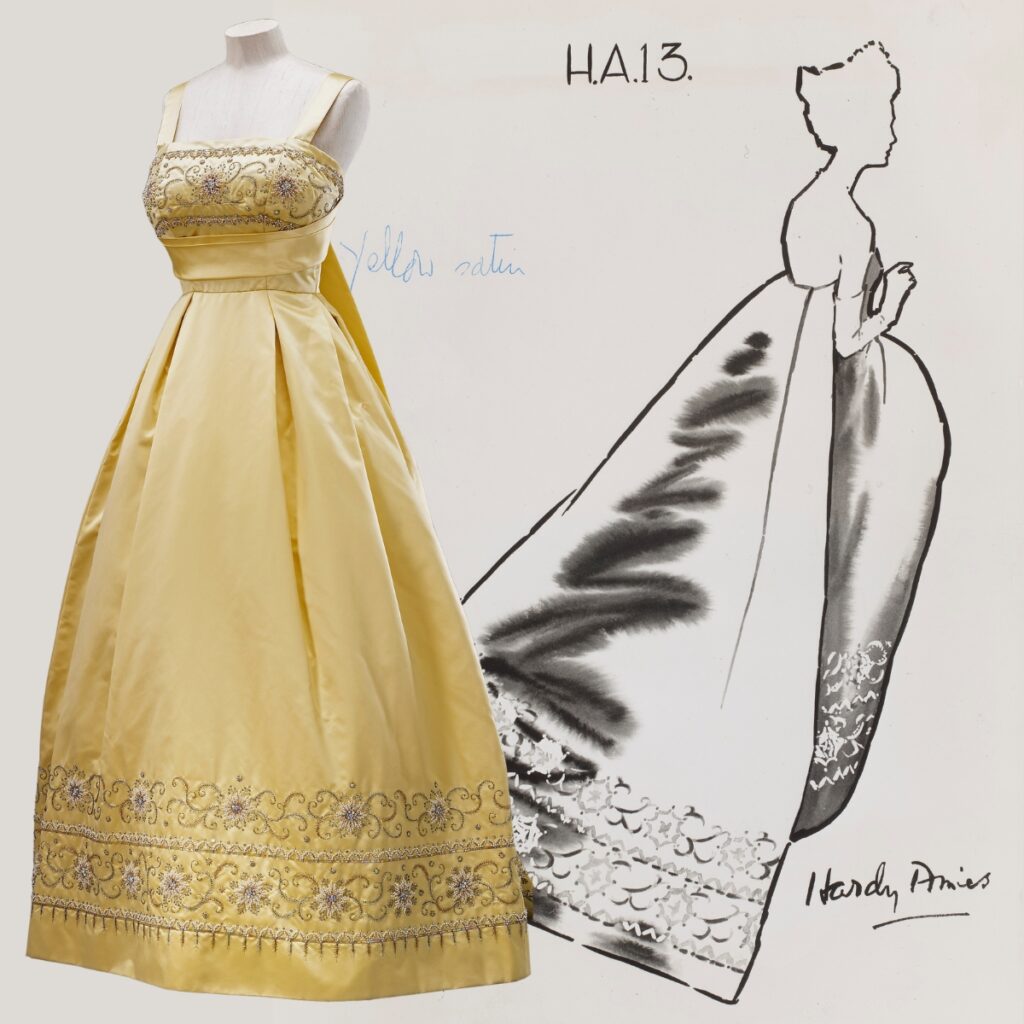
Sketch and Evening Gown, Hardy Amies, 1961.
© Royal Collection Enterprises Limited 2026 | Royal Collection Trust. Photographer: Jon Stokes.
The obvious temptation is to treat it as a royal fashion parade: gowns, tiaras, wedding jewels, famous hats, a little heritage glow, and everyone goes home pleased. But that would miss the point. What this exhibition really reveals is that Queen Elizabeth II did not dress merely to look appropriate. She dressed to make monarchy legible.
Clothes, for her, were never incidental. They were part of the job. A form of public etiquette. A way of being seen clearly, understood quickly and remembered properly. In a century that moved from newsreels to Instagram, she built one of the most consistent visual identities in modern history without ever seeming enslaved to image-making. That alone feels almost exotic now.
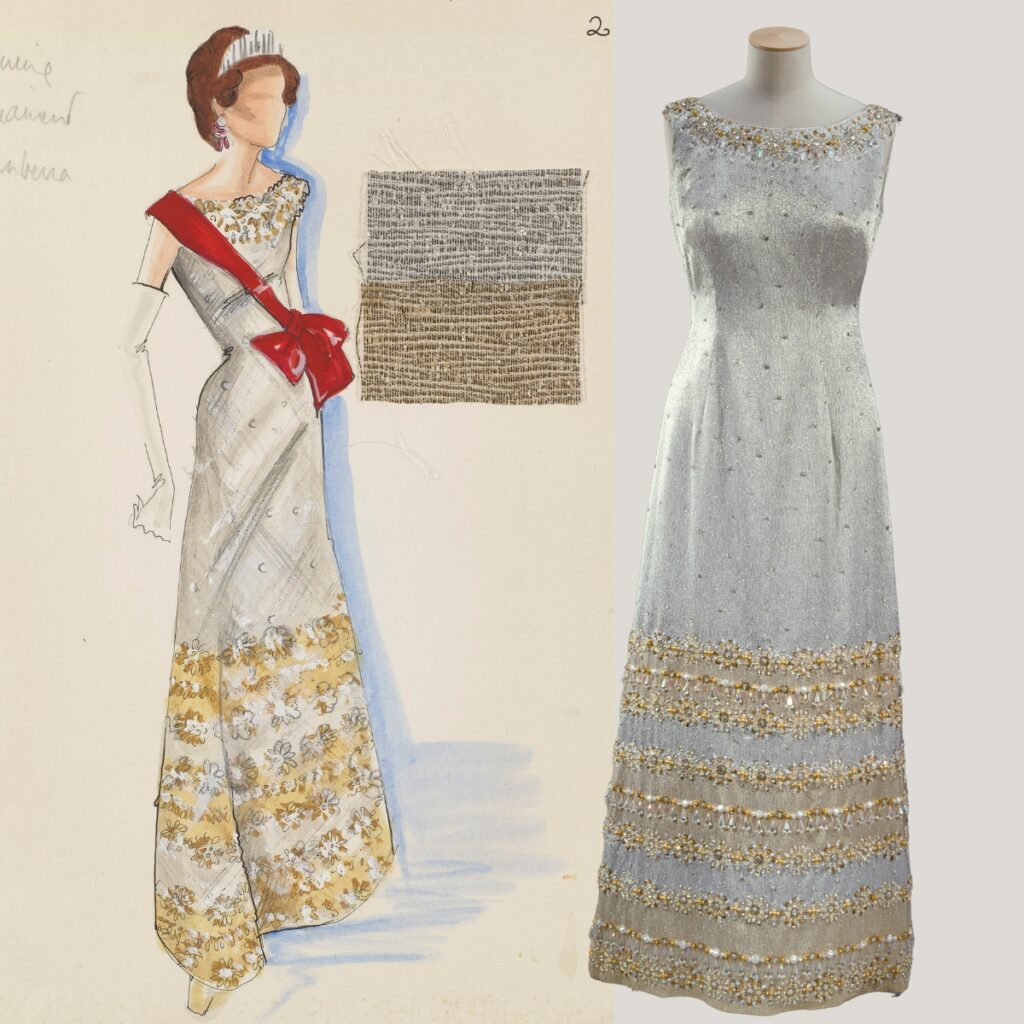
Silver Lamé Beaded Shift Dress, Norman Hartnell, 1972. An illustration of the shift dress worn during a State Visit to France in 1972, Norman Hartnell.
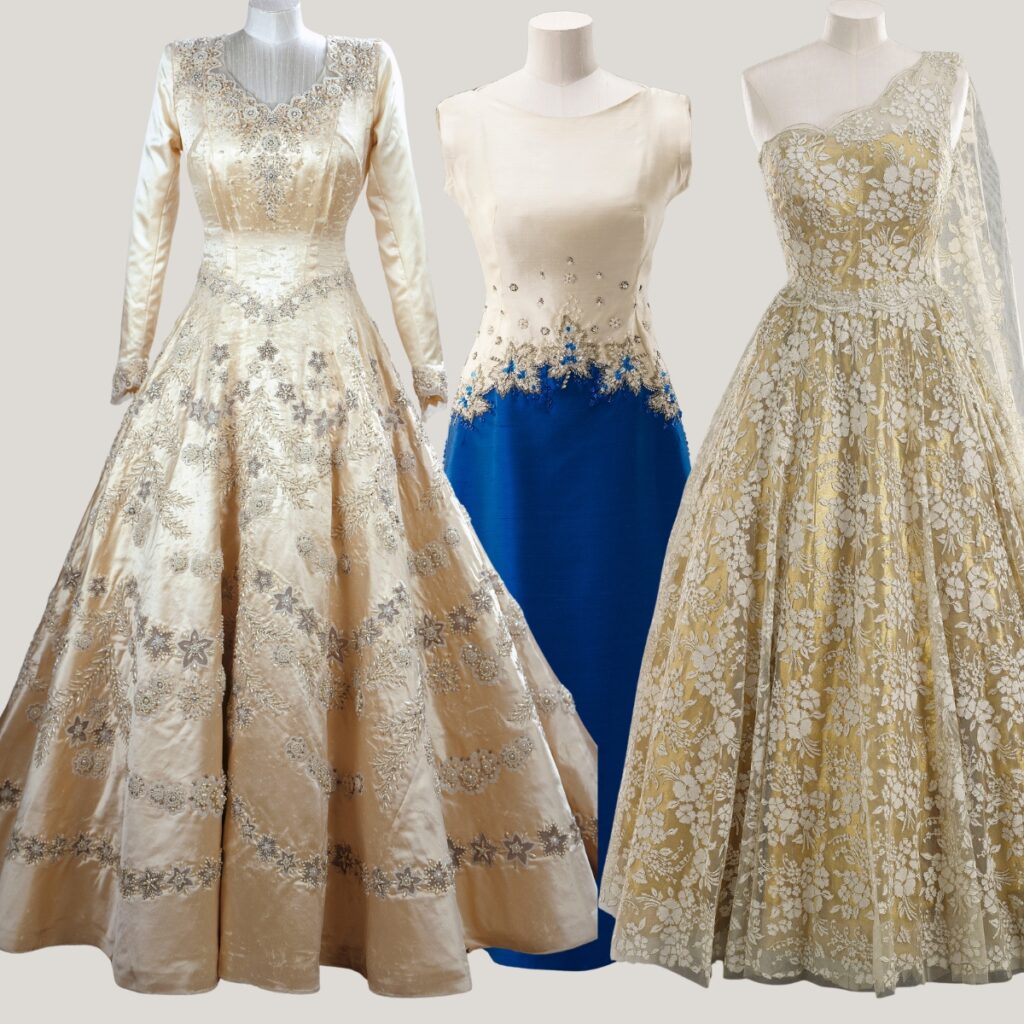
First Dress Left: Princess Elizabeth’s Wedding Dress,
Norman Hartnell, 1947.
At Right: Rare surviving evening gown from Queen Elizabeth’s first Commonwealth tour as monarch, Norman Hartnell, 1953.
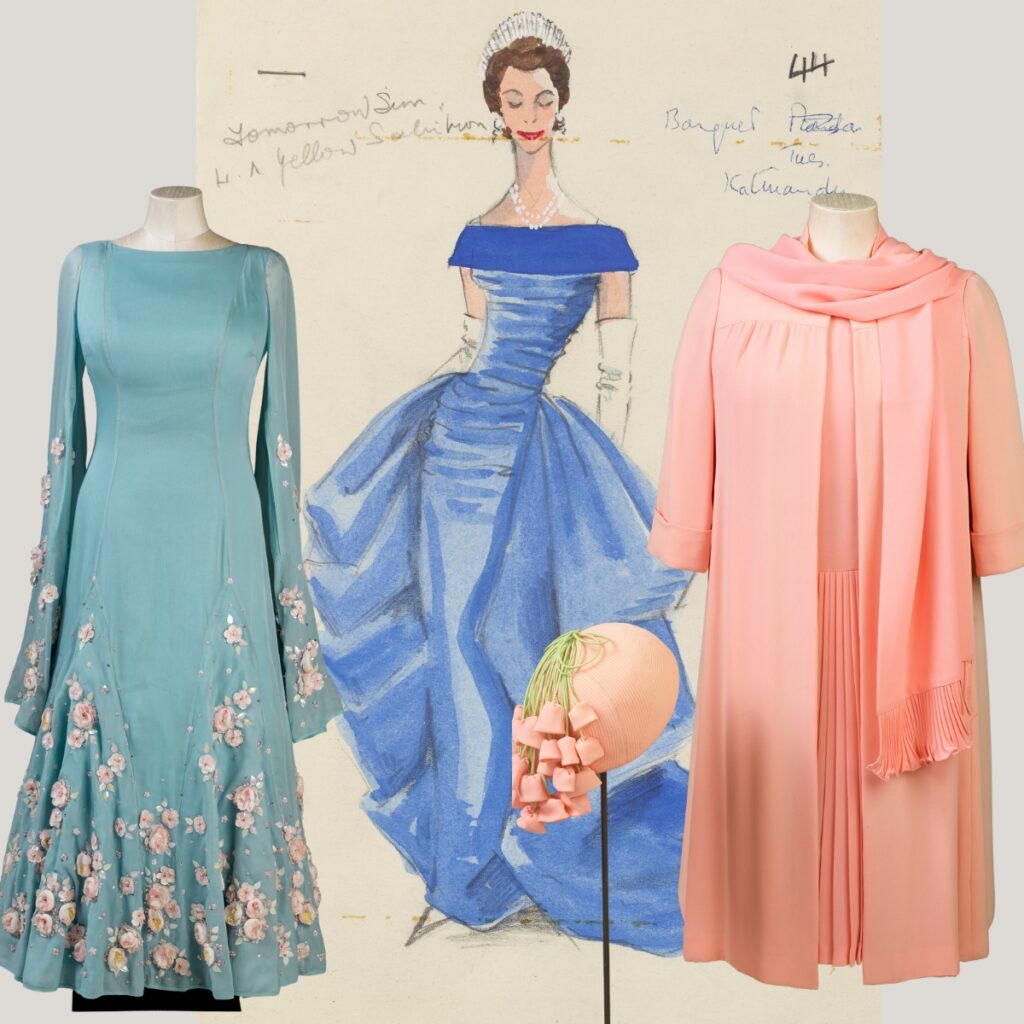
‘Cherry Blossom’ Evening Dress, Norman Hartnell, 1975, worn during a State Visit to Japan and referencing the Japanese celebration of sakura (cherry blossoms).
A sketch for an evening gown worn on the tour of India, Nepal and Pakistan by Norman Hartnell, 1961. Dress, Coat and Stole, Hardy Amies, 1976.
The exhibition traces that method through the great ceremonial and personal moments of her life: clothes worn as a child at her parents’ Coronation, her wedding dress, garments from her first Commonwealth tour as Queen, Jubilee ensembles, and the famous outfit connected to her 2012 Olympic appearance with Daniel Craig. Even the duplicate dress altered for her stunt double is on show, which is marvellous in itself. It reminds us that the royal image was never only about beauty. It was theatre, engineering, diplomacy and continuity stitched together.
From Tiaras to Tweed: The Private and Public Queen
Yes, the glamour is there. It would be absurd to pretend otherwise.
The official highlights include her wedding jewellery, Queen Mary’s Diamond Fringe Tiara, the Burmese Ruby Tiara, the Queen Elizabeth II Aquamarine Tiara, and necklaces shown publicly for the first time. There are evening gowns, ceremonial pieces and a central display that gives the full royal shimmer people will naturally hope for.
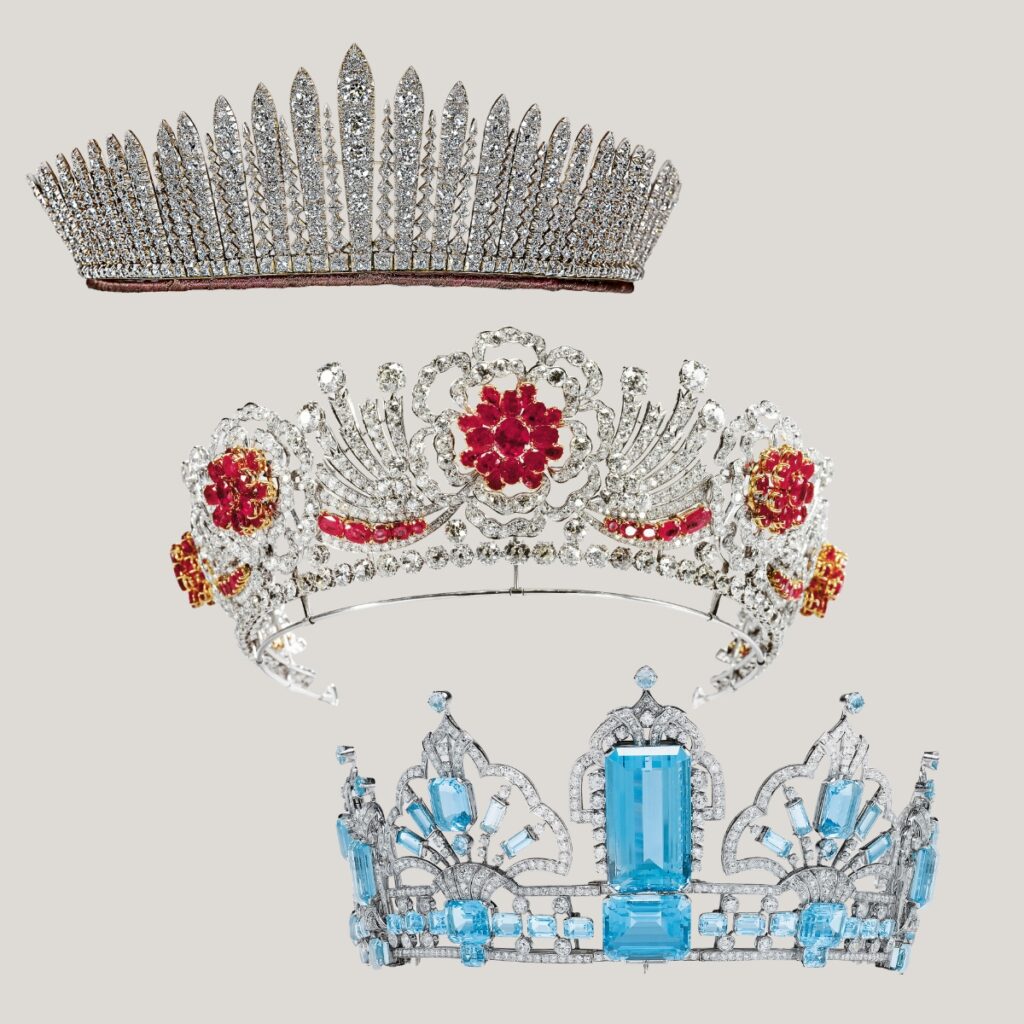
Queen Mary’s Diamond Fringe Tiara.
Queen Elizabeth II’s Burmese Ruby Tiara, Garrard & Co. Ltd, 1971.
Queen Elizabeth II’s Aquamarine Tiara, Garrard & Co. Ltd, 1956. ©Royal Collection Enterprises Limited | All Rights Reserved
But the exhibition becomes more interesting when it moves beyond sparkle. A rainbow of daywear shows how consciously the Queen used colour. More than 50 hats reveal a streak of experimentation that is easy to forget now, from turbans and berets to the more sculptural shapes of later decades. Then come the accessories that made her silhouette so instantly readable: Launer handbags, silk scarves, gloves, sensible shoes, and those wonderfully practical clear umbrellas trimmed to match her outfits.
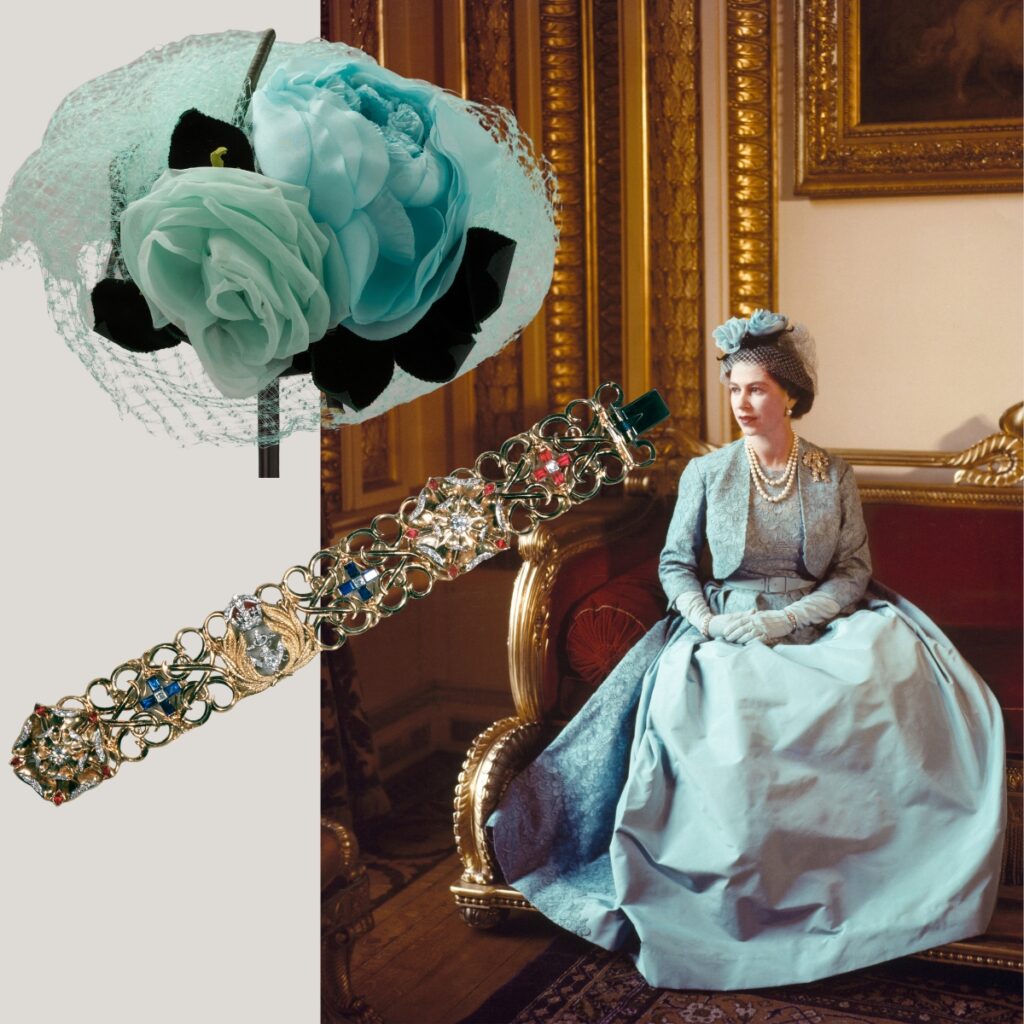
Hat worn for the wedding of Princess Margaret,
Claude St Cyr, 1960. – @Paul Bulley.
Fifth Wedding Anniversary Bracelet, Boucheron, 1952. Made to Prince Philip’s design – Queen Elisabeth ©Cecil Beaton Victoria and Albert Museum, London.
It all speaks to a woman who understood that repetition, when done well, becomes signature. The consistency was not dullness. It was discipline. She did not dress to surprise people. She dressed so people could recognise her from a distance, in a crowd, in the rain, at a moment of national importance. That is not fashion as novelty. It is fashion as reassurance.
And then comes the section that may quietly steal the show: her off-duty wardrobe. Tweed, riding clothes, weatherproof outerwear, British tailoring, garments made for movement rather than ceremony. This is where the Queen stops looking like an emblem and starts looking like a woman shaped by routine, weather, duty and habit. There is something deeply appealing in that kind of elegance. It does not perform effortlessly. It simply gets dressed and carries on.
Why This Exhibition Feels Strangely Timely
The most intimate revelation may not be a dress at all, but the material behind it: sketches, fabric swatches, invoices and annotations in the Queen’s own hand. These details make one point very clearly. She was not a passive mannequin for the Crown, but an involved and attentive centre figure. She understood that dress was part of how she met the world.
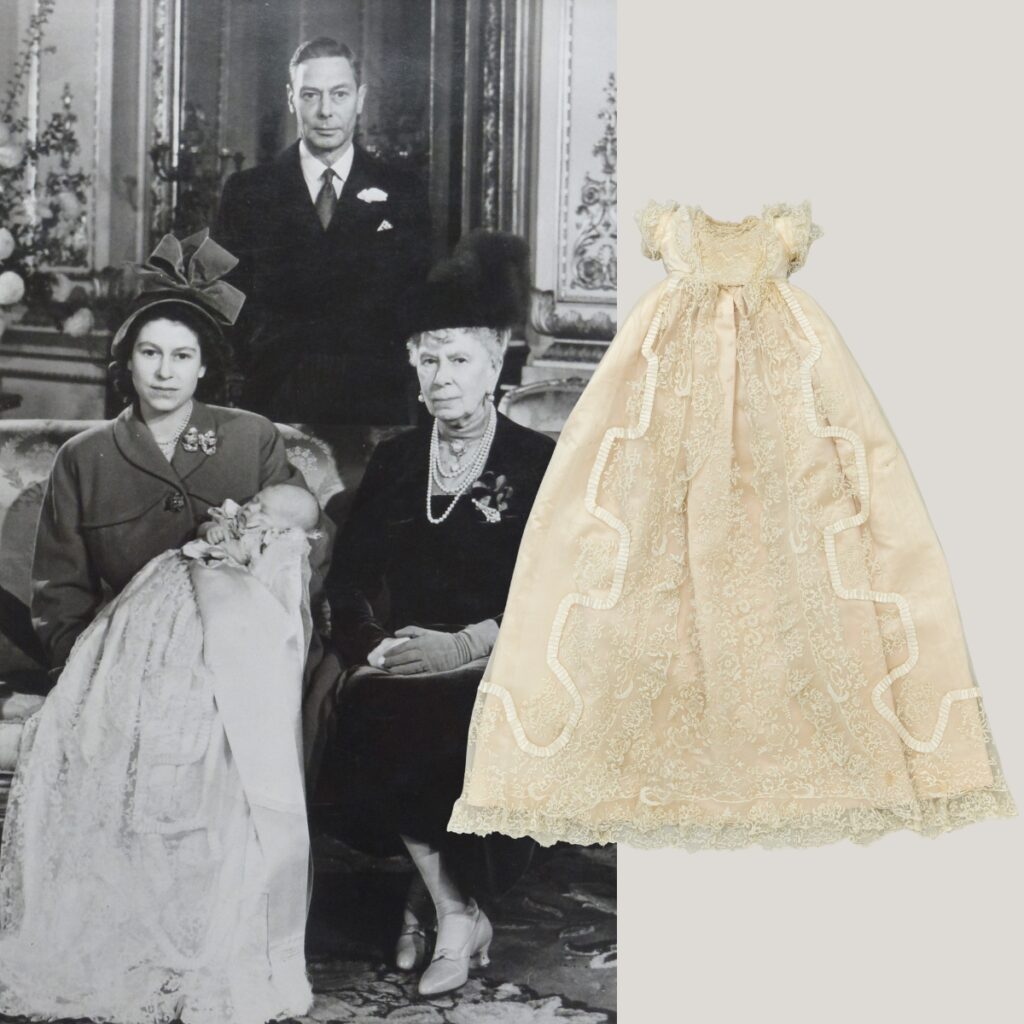
Four generations of the Royal Family on Prince Charles’s christening day, 1948. The Royal Christening Robe, Janet Sutherland, 1841.
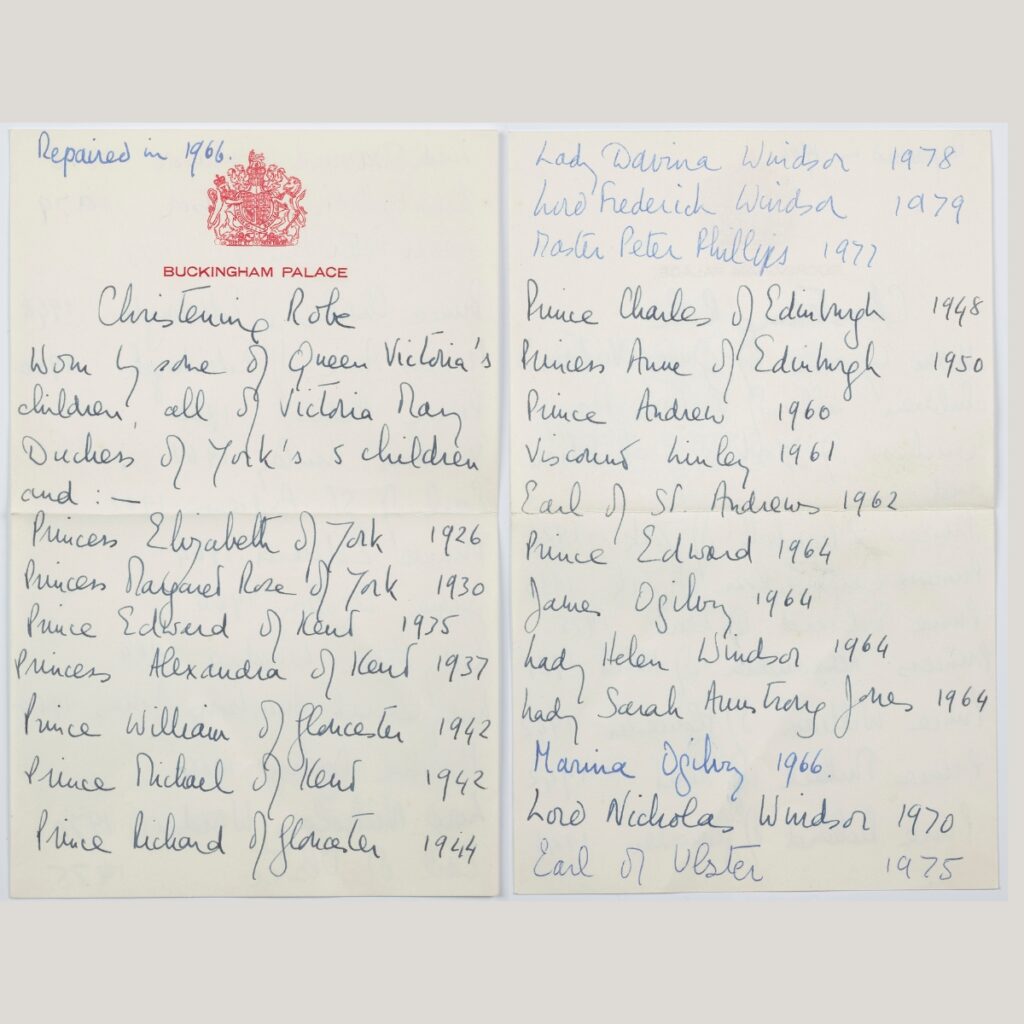
Handwritten notes by Queen Elizabeth II recording the royal babies had worn the robe until the 1970s.
That is why this exhibition lands so well now. We live in a culture that mistakes exposure for authenticity and noise for personality. Everything must announce itself. Everything must explain itself. Queen Elizabeth II belonged to another visual tradition altogether. Her clothes communicated without oversharing. They carried symbolism without collapsing into costume. They offered presence without demanding intimacy.
That may be why the historical images you were sent will be so powerful in the final article. They will show the arc of a woman, yes, but also the arc of a discipline. The young princess in couture. The sovereign in Hartnell and ceremonial embroidery. The older Queen in bright coats, gloves and pearls. And, behind it all, the country wardrobe of scarves, tweed and practical coats. A whole life expressed not through reinvention, but through refinement.
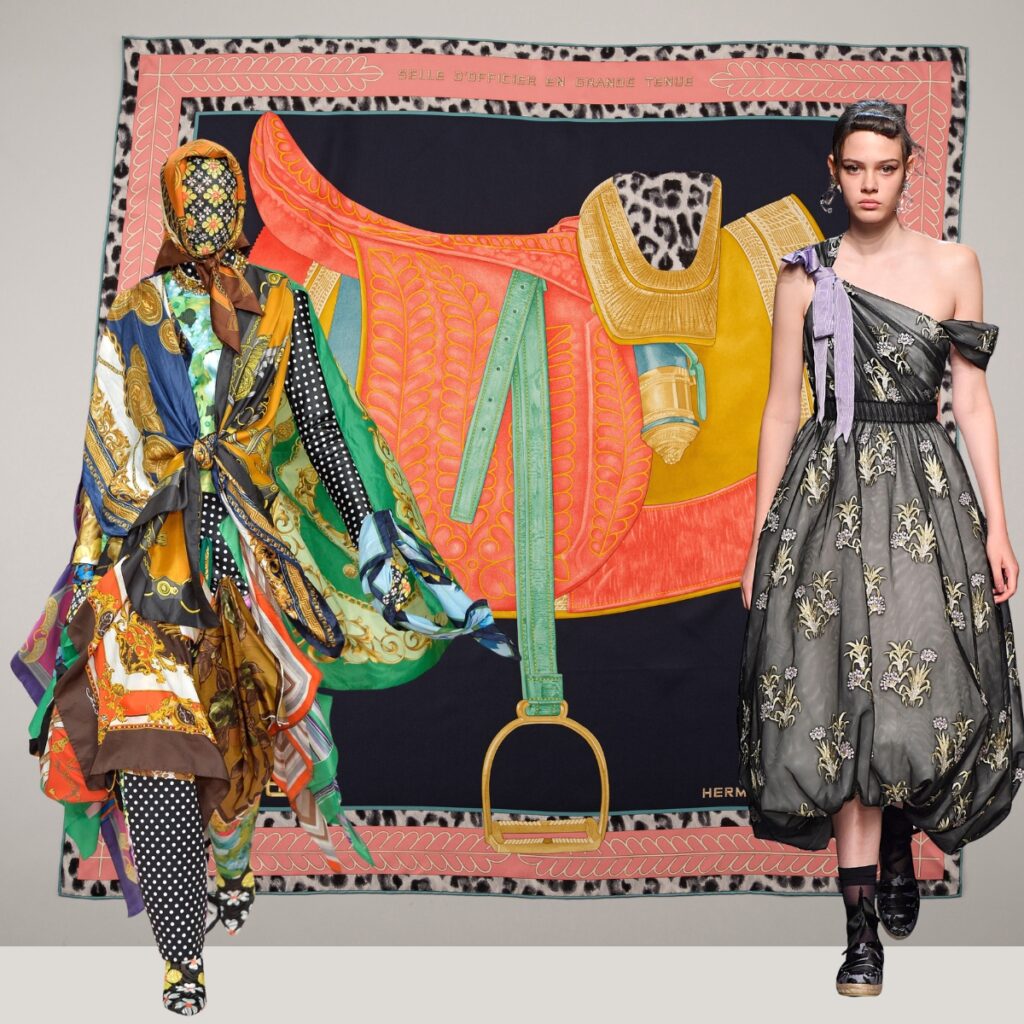
Scarf, Hermès for SSAFA, 2018.
Ensemble, Richard Quinn, Autumn / Winter 2018.
Dress, Erdem, Spring / Summer 2018.
The exhibition closes by placing her wardrobe in dialogue with contemporary designers such as Richard Quinn, Christopher Kane and Erdem, which makes perfect sense. Her influence on British fashion was never about trend. It was about constancy, craft and visual memory.
In the end, this is not an exhibition about a stylish woman in the shallow sense. It is about a woman who understood that clothes could serve something larger than self-expression. Duty, symbolism, nationhood, composure, ritual. Not exactly the usual fashion vocabulary, which is perhaps why it feels so fresh.
Because the real lesson here is not that Queen Elizabeth dressed well. It is that she understood what dressing well was for.
Feature Image © Cecil Beaton, Victoria and Albert Museum, London. All The Other Images © Royal Collection Enterprises Limited 2026 | Royal Collection Trust.
SHARE



