Lily Colins Zalando Ambassador: More Chic Than Emily

Zalando did not choose Lily Collins for noise. It chose her for something rarer in fashion now: credibility.
The phrase Lily Colins Zalando Ambassador sounds almost too neat at first. Too marketable. Too easy. But the more you think about it, the more interesting it becomes.
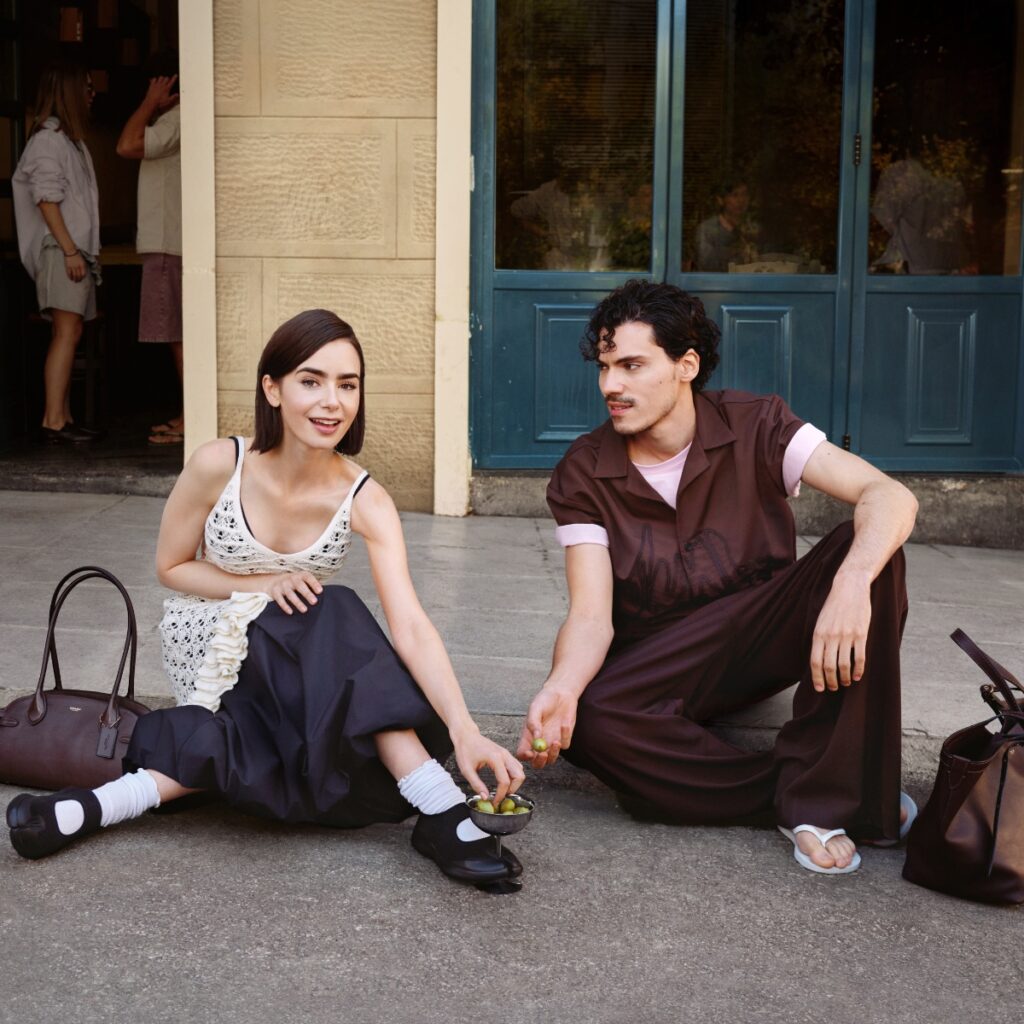
In February 2026, Zalando named Lily Collins its first global brand ambassador, placing her at the centre of its Spring/Summer 2026 campaign. For a Berlin-based fashion giant and a key force behind Copenhagen Fashion Week, this was not a random celebrity attachment. It was an image decision. A cultural one, even. Zalando was not simply borrowing a famous face. It was choosing a woman who embodies a version of style that feels polished, feminine and modern without looking exhausting.
And that is where the irony begins. Because for millions of people, Lily Collins entered the fashion conversation through Emily in Paris, a series whose wardrobe often feels less like style and more like a nervous breakdown with a costume budget.
Emily in Paris, or the triumph of fashionable nonsense
Emily Cooper is not so much dressed as assembled. She lies easily, loves messily, and walks through Paris as if practicality were a private insult. She wears stilettos to pick truffles, colour combinations that feel algorithmically generated, and enough designer clothing to suggest either secret oligarch parents or a very generous costume department.
And yet she works.
Or rather, the show works. Viewers mock it, hate-watch it, complain about it, and still return. Emily in Paris understands one simple truth: fashion on screen does not need to be believable to be effective. It only needs to be memorable. Like Sex and the City before it, the series turns clothing into spectacle, identity, aspiration and absurdity all at once. French commentators were quick to point out how little Emily’s wardrobe had to do with actual Parisian style, often criticising it as caricature rather than elegance.
That, of course, is precisely the point. Emily is not a woman with style. She is a woman dressed for attention. Those are not the same thing.
Lily Collins was always the better fashion story
@zalando
Off-screen, Lily Collins is another matter entirely.
The British-American actress and producer has always projected a more disciplined kind of beauty: classic, controlled, slightly literary. She is glamorous, yes, but never noisy. There is something almost old-fashioned about her appeal, in the best possible sense. Not retro, not nostalgic, simply composed. Encyclopaedia Britannica notes her Anglo-American background and early journalistic interests, which somehow tracks with the impression she gives: not just pretty, but edited.
Years ago, The Daily Telegraph described her as having “an adorable, sensational, almost perfect face for cinema”, famously comparing her to “Audrey Hepburn with the eyebrows of Liam Gallagher.” It remains one of those rare critical lines that is both slightly ridiculous and completely right.
But the real distinction is not her face. It is her taste.
Lily Collins dresses like a woman, not a concept. She gravitates towards sharp tailoring, clean eveningwear, precise silhouettes, restrained palettes, and the kind of femininity that does not need to become ironic to feel intelligent. She understands proportion. She understands restraint. She understands that elegance is often just good judgment made visible.
In other words, Lily Collins is far more Parisian than Emily ever managed to be.
Why Zalando chose well

@zalando
This is exactly why the appointment makes sense. Zalando’s own messaging around the campaign framed Collins as a guide to European summer style, someone moving through fashion “like a local” rather than treating it as a fantasy costume. That is a clever distinction. It shifts the conversation away from fashion as performance and towards fashion as fluency.
And fluency is what Lily Collins offers.
Lily Colins Zalando Ambassador works because she sits in that rare sweet spot between aspiration and relatability. She is elegant, but not alienating. Beautiful, but not brittle. She can wear fashion without being worn by it, which is not as common among celebrity brand ambassadors as the luxury world likes to pretend.
At a moment when so much of the industry confuses excess with personality, Collins offers something cooler and harder to fake: coherence.
If Emily were actually French

@zalando
If Emily were truly French, or at least written with any real understanding of French chic, her wardrobe would be less decorative and more certain.
There would be fewer desperate colours, fewer accessories competing for oxygen, fewer outfits designed like social media bait. She would repeat good pieces. She would trust a navy knit, a worn trench, a man’s shirt, black trousers, straight jeans, a loafer, and a sensible heel. She would know that charm is strongest when it arrives sideways.
The genuinely chic woman does not want to look like a walking mood board. She wants to look like herself on a very good day.
This is the central problem with Emily’s clothes: they are all declaration and no discretion. They do not suggest style. They insist on it. And style, when it is real, rarely insists.
From spectacle to substance
That is why Lily Collins, Zalando Ambassador is more than a celebrity fashion headline. It marks a subtle correction. The woman made globally famous by one of television’s loudest wardrobes is now fronting a brand on the strength of her quieter, more believable taste.
Emily in Paris gave Lily Collins visibility. But visibility is cheap now. Everyone is visible. What remains rare is credibility.
Lily Collins has that. Not because she dresses minimally, or expensively, or in a way that flatters the internet. But because she looks like she knows who she is. In fashion, that still counts for more than novelty.
And perhaps that is the final joke of the whole thing. Emily may have introduced Lily Collins to the style conversation. But Lily herself was always the more convincing answer.
SHARE



