How Paris Does Easter: Faith, History and a Very Good Brunch

A guide to Easter in Paris, from rue du Bac and Notre-Dame to Saint-Germain-des-Prés, with a city still shaped by Catholic memory beneath its secular surface.
Paris at Easter is not a devotional postcard. It is full of tourists, crowded terraces, museum queues, and people who barely register that the most important feast in the Catholic calendar has arrived. And yet Paris is also a city profoundly shaped by its Catholic history, with churches, relics, rituals, and sacred addresses that still carry the memory of a Christian civilisation. If you know where to look, you can still find real pearls for Holy Week in the middle of a secular capital. Notre-Dame’s official programme confirms how fully these days are still marked, from Palm Sunday to Easter Sunday.
In 2026, that tension between secular France and Catholic continuity feels especially striking. According to the French Church’s catechumenate survey, 13,234 adults will receive baptism in France at the Easter Vigil, with adolescents bringing the total to 21,386. It is a record in a country known for its strong secular tradition. That does not prove a national religious return in any simple sense, but it does show that Catholic faith in France is attracting new converts in numbers difficult to ignore.
So save this article for next year if you are planning to travel to Paris during Easter. Beyond the obvious beauty of the city, there is another Paris available during Holy Week: one of confession, liturgy, relics, ancient churches, and then, because this is still Paris, an excellent brunch. That is how the city does Easter. Not as a retreat from the world, but as a reminder that beneath the secular surface, Paris still remembers what it was built around.
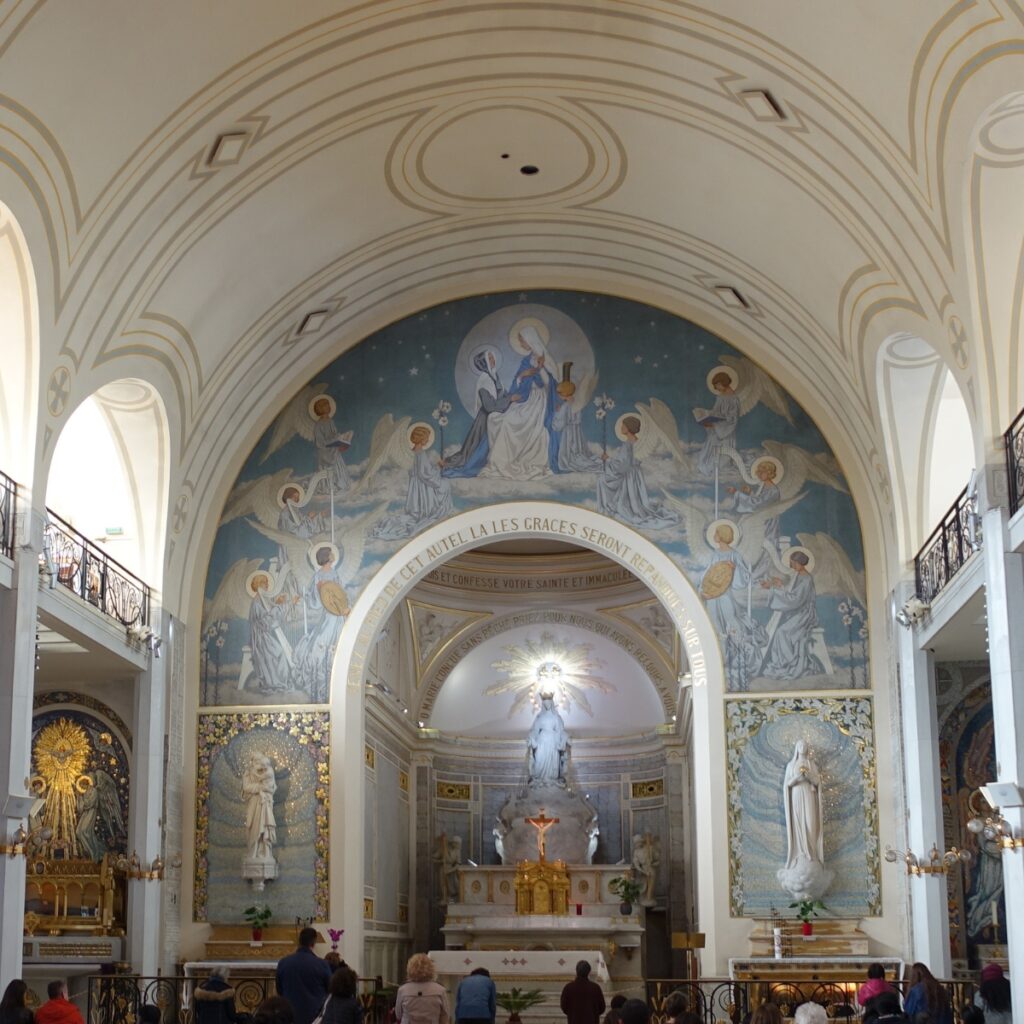
Chapel of Our Lady of the Miraculous Medal @commonswikimedia
Rue du Bac and the grace of discretion
The Chapelle Notre-Dame de la Médaille Miraculeuse, at 140 rue du Bac in the 7th arrondissement, remains one of the most meaningful Catholic addresses in Paris. It is associated with the apparitions received by Saint Catherine Labouré in 1830 and continues to welcome pilgrims from around the world. For Holy Week visitors, it is also practical as well as spiritual: the chapel’s official schedule lists daily confessions from 9:00 to 13:00 and from 15:00 to 18:00 on weekdays, with slightly shorter hours on Saturday.
That is what confessing here during Holy Week feels so right. Rue du Bac does not rely on monumental scale. It offers recollection. In a city that often behaves as though it is permanently on stage, this chapel feels like a side door into silence. Catholic Paris is not only grand. Sometimes it is hidden, Marian, and almost domestic in its quietness.
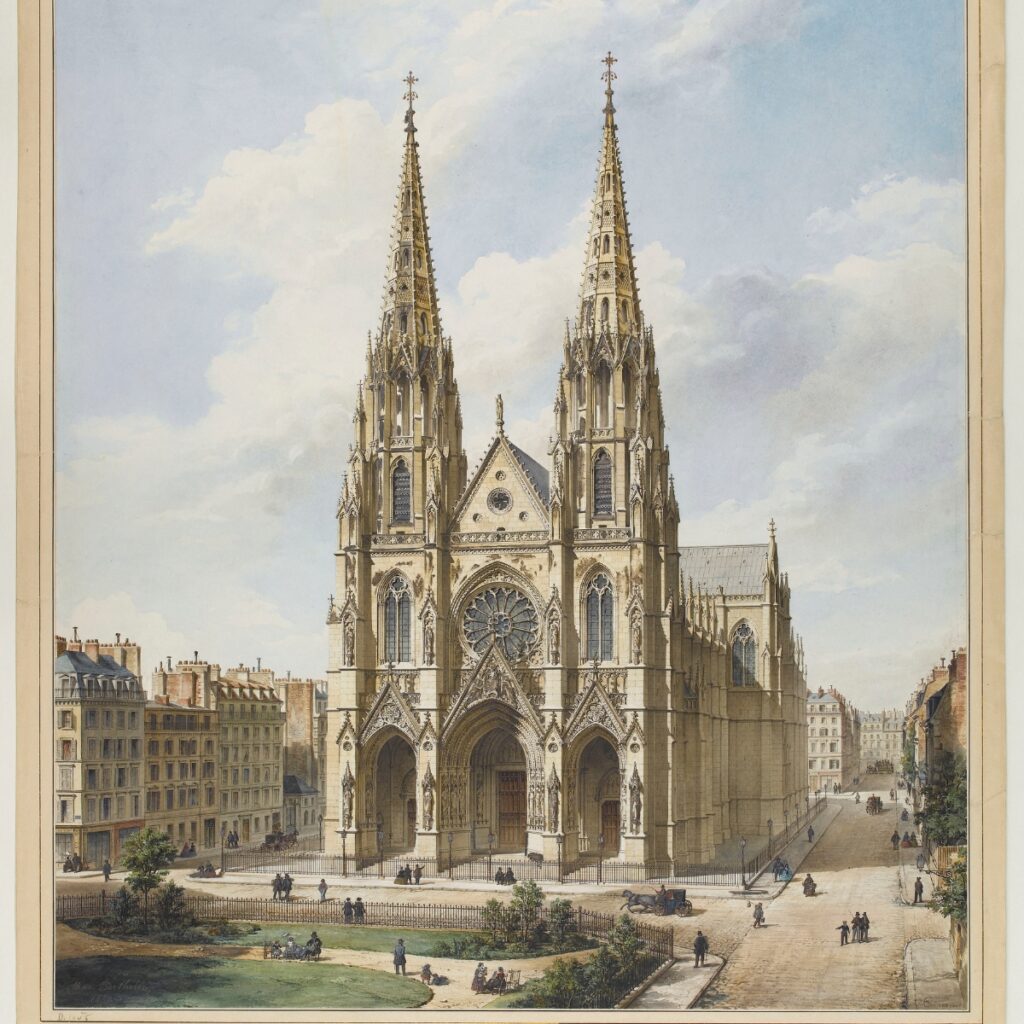
Church Sainte-Clotilde @commonwikimedia
Sainte-Clotilde and the beauty of service
If rue du Bac is inward, Sainte-Clotilde is vertical. The basilica, consecrated in 1857, is one of the major neo-Gothic churches of 19th-century Paris and remains closely associated with César Franck, who served there as organist. The architecture gives Holy Week real solemnity without turning it into theatre.
The washing of the feet on Holy Thursday is one of the most moving moments of the liturgical year because it reveals the heart of the Gospel through an act of humble service. In a church as architecturally commanding as Sainte-Clotilde, that gesture becomes even more luminous. Paris is very good at prestige. Christianity reminds us that greatness kneels.
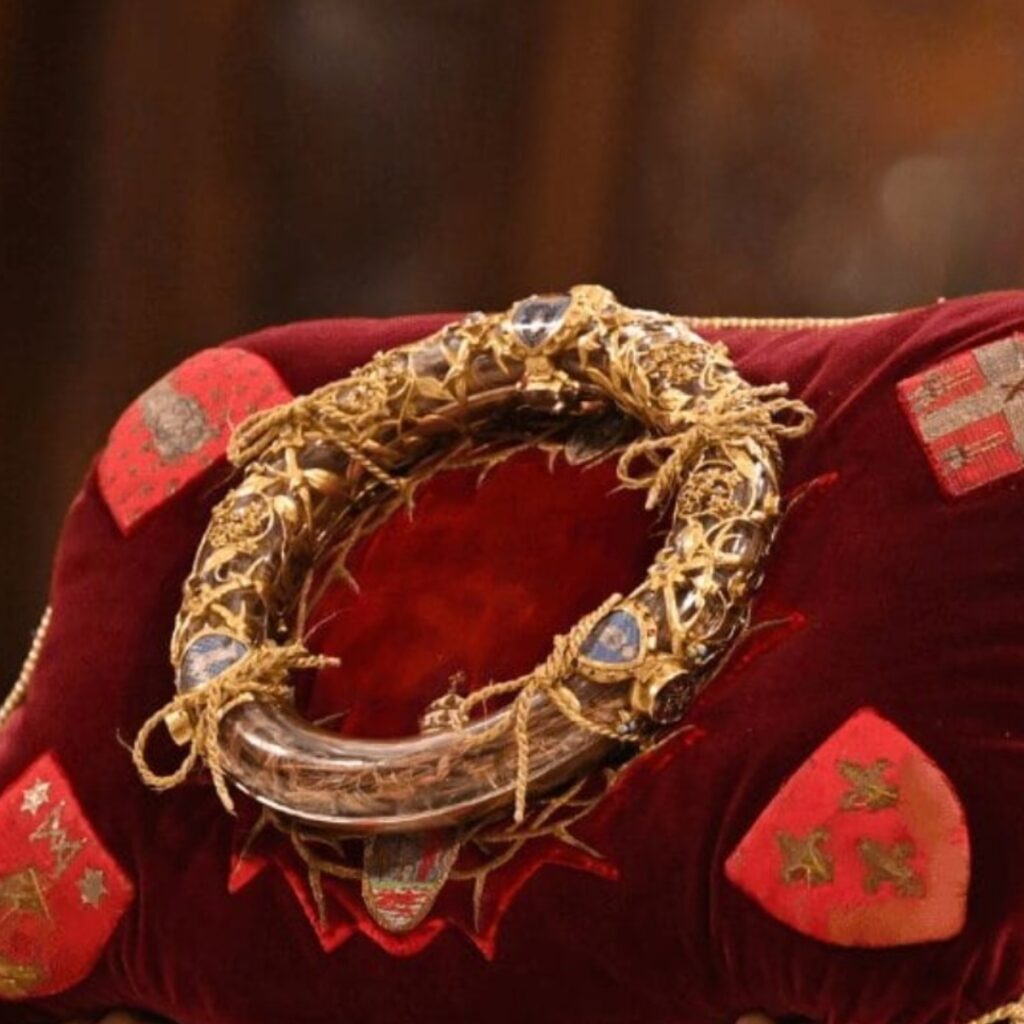
The Crown of Thorns @NotreDame Paris
Notre-Dame and the adoration of the Crown of Thorns
Among Paris’s Holy Week addresses, Notre-Dame remains the most symbolically charged. The cathedral’s official Holy Week programme for Good Friday includes veneration of the Crown of Thorns, alongside Tenebrae, the Stations of the Cross, and the Passion service.
That detail matters because the Crown of Thorns is not simply a beautiful relic in a famous cathedral. Notre-Dame explains that it was venerated in Jerusalem from the late 4th century, transferred to Constantinople in the 10th century, acquired by Saint Louis in 1238, and brought to Paris in 1239, where it was carried in procession to Notre-Dame. During Holy Week, the adoration of the couronne d’épines gives the city one of its most concentrated moments of Catholic memory. In Paris, history is often treated like décor. At Notre-Dame, it becomes presence.
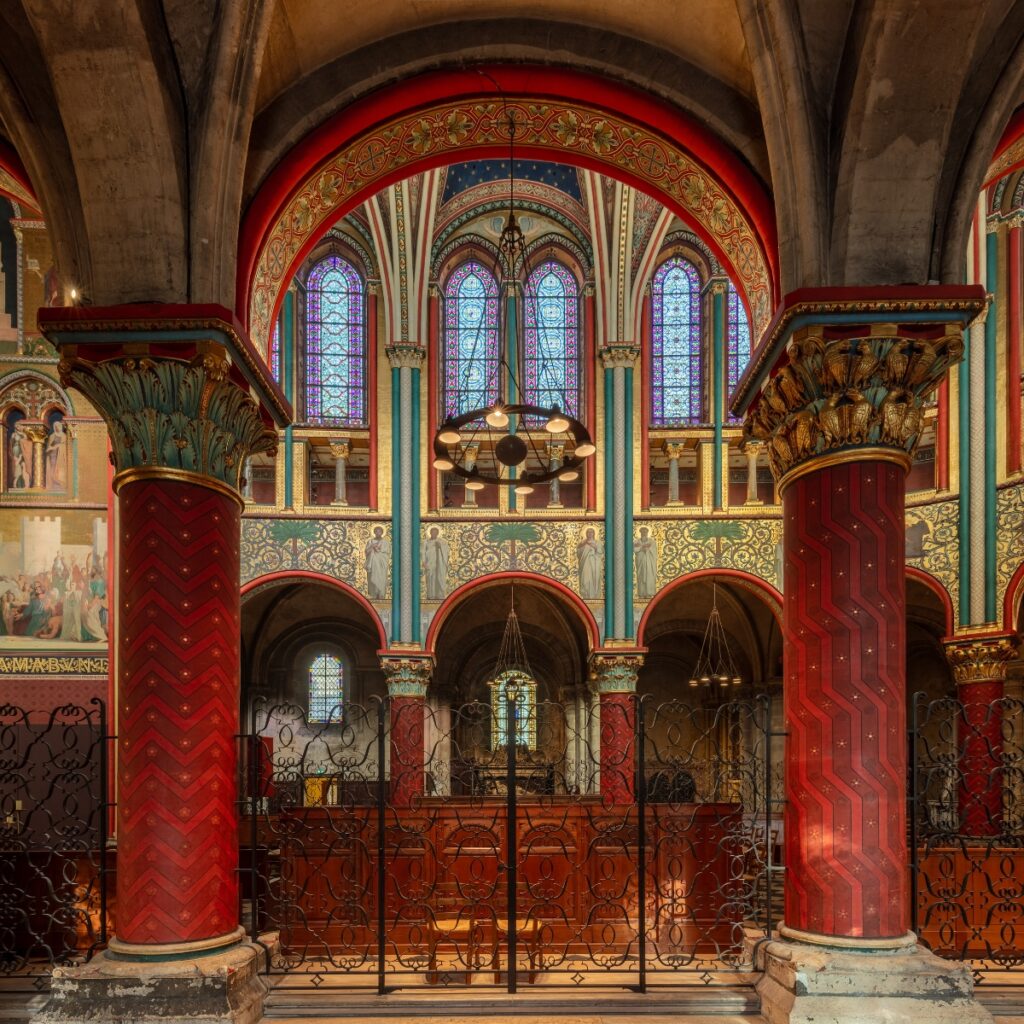
Church Saint-Germain-des-Prés @CommonsWikimedia
Saint-Germain-des-Prés and the long memory of Paris
Saint-Germain-des-Prés deserves more than a passing mention. Founded in 543, it is one of the oldest church sites in Paris. The current choir was built in the mid-12th century in the early Gothic style and was consecrated by Pope Alexander III on 21 April 1163. According to the church’s own history, it was one of the first Gothic buildings and played an important role in the spread of that new architectural language.
Its story reaches even further back into the origins of Christian France. The abbey was founded by King Childebert of the Merovingians, originally as the basilica of Sainte-Croix and Saint-Vincent, to house relics and royal tombs. It was damaged by Viking invasions, rebuilt around the year 1000, and expanded across the centuries. What survives today is not only a beautiful church in a fashionable neighbourhood, but one of the places where the earliest layers of French Christian history are still legible.
That is why Easter Mass there has a special beauty. Enduring beauty. In Saint-Germain-des-Prés, you feel that Paris did not begin with tourism, nor with fashion, nor with Left Bank mythology. The city has older foundations, and Easter makes them visible again.
Why this matters now
What makes Holy Week in Paris interesting is not only the survival of old rituals. It is the sense that Catholicism in France is no longer only a heritage. The record number of adult baptisms suggests that, for some people at least, faith is becoming newly compelling. Paris has not suddenly become pious. Of course not. It remains secular, distracted, stylish, overcrowded, and self-aware. But the religious layer is still there, and in some cases, it is reawakening.
Perhaps that is what makes Easter in Paris so interesting. It is not obvious. It has to be sought out. You move through a world of brunch reservations, luxury windows, and museum crowds, and then suddenly you are inside a chapel, or before the Crown of Thorns, or at Mass in one of the oldest churches in the city. Paris never stopped being Catholic in stone. The surprise is that, for some, it may be becoming Catholic again in practice.
Then comes brunch, because this is still Paris
After Mass and church visits, Easter in Paris often becomes a social affair. The solemnity of Holy Week gives way to family lunches, chocolate, and beautifully staged brunches. That transition is not a betrayal of the feast. It is part of the celebration. Paris knows how to move from devotion to appetite without embarrassment.
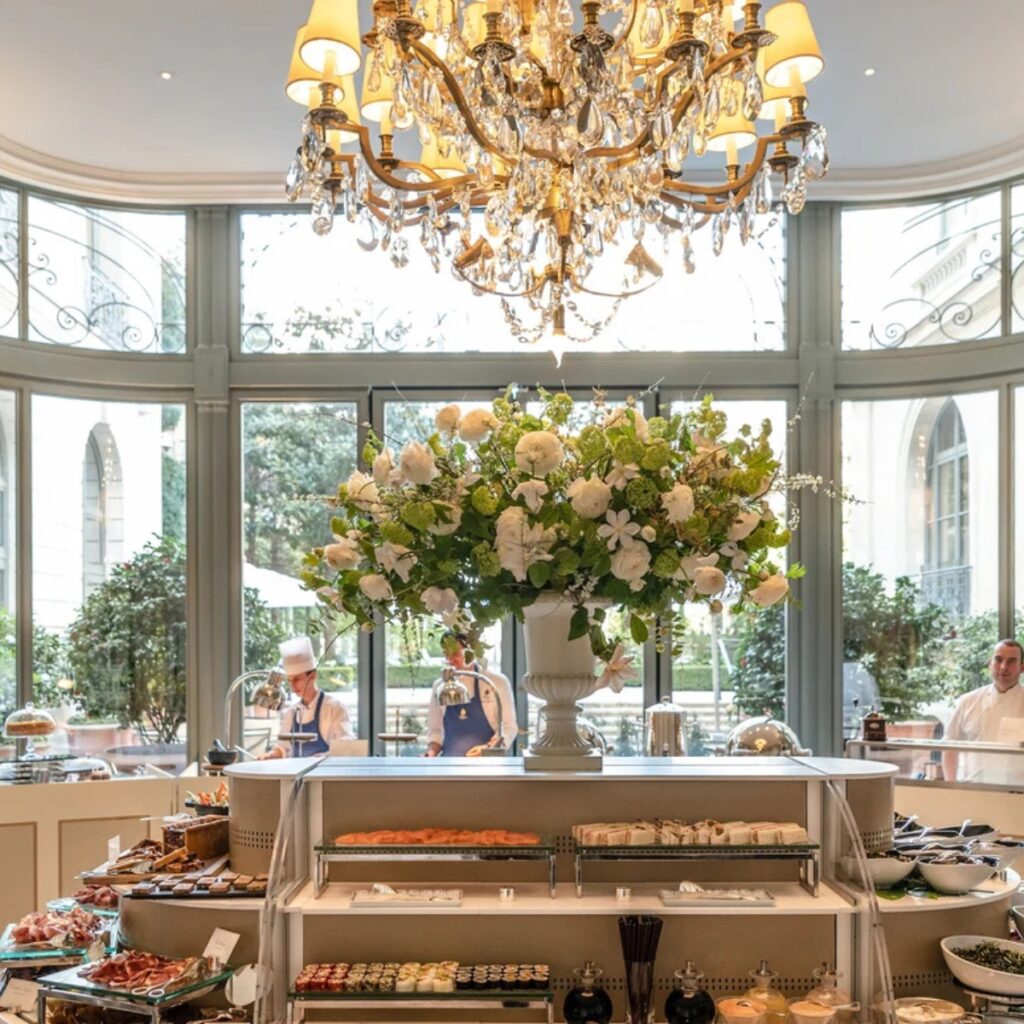
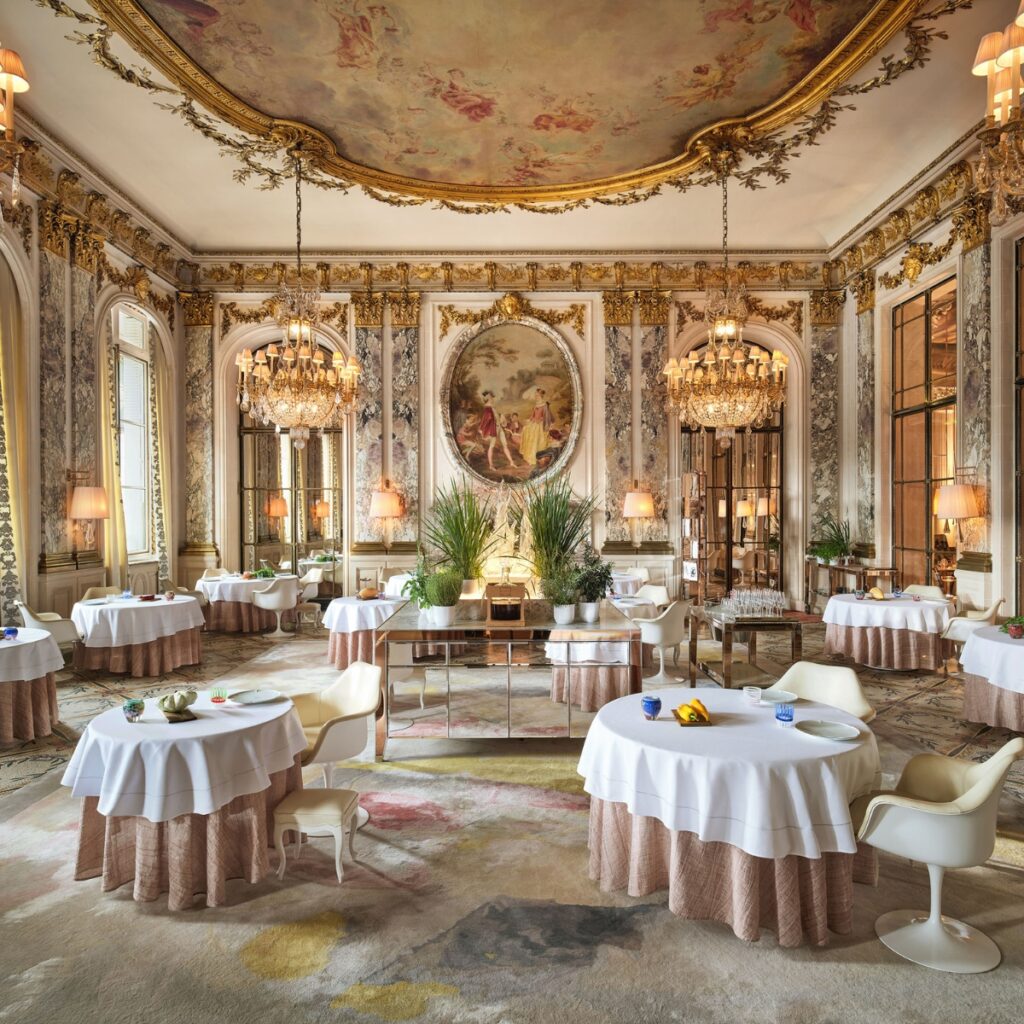
The grand hotel version is easy to find. The Ritz Paris offers its Easter Brunch on Sunday. Le Meurice also marks Easter with a Sunday brunch at Restaurant Le Dalí, followed by Easter Monday lunch.
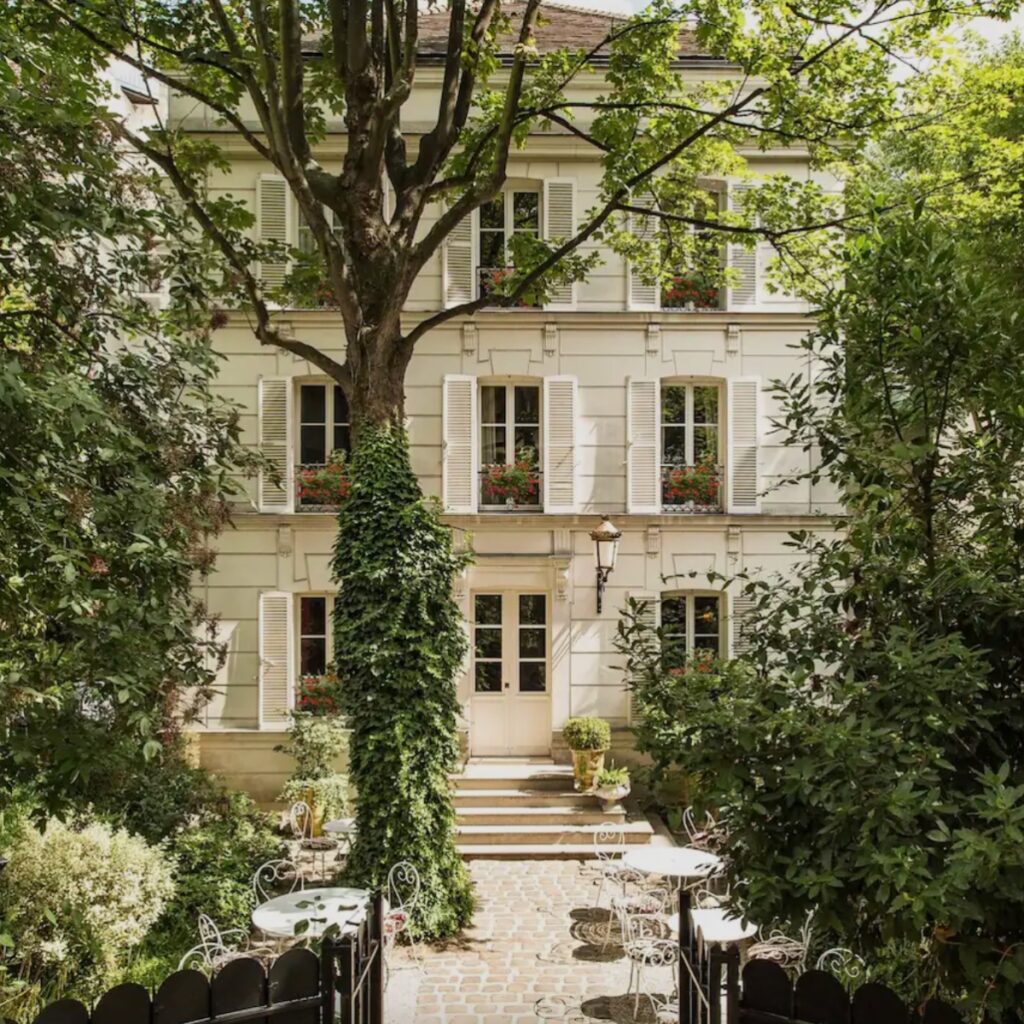
Beyond the palace hotels, the mood becomes more local and relaxed. Monsieur Bleu, in the Palais de Tokyo, brings Easter lunch into a museum-world setting with one of the city’s great Eiffel Tower views. Hôtel Particulier Montmartre offers a more secluded version of the pleasure, tucked into one of Paris’s most cinematic corners. And then there are the cafés of the Marais and Montmartre, where Easter lunch feels less ceremonial and more lived-in. That may be the most Parisian tradition of all: gathering well, after church, without any need to explain why pleasure and ritual belong together.
So yes, Paris at Easter is crowded, distracted, and largely secular on the surface. But it is also a city where Catholic memory still shapes space, ceremony, and time. If you are travelling there during Holy Week, do not expect the whole city to announce the meaning of the season to you. It will not. You have to go looking. But if you do, Paris answers with confession at rue du Bac, the washing of the feet at Sainte-Clotilde, the adoration of the Crown of Thorns at Notre-Dame, Mass at Saint-Germain-des-Prés, and then, because it is Paris, a very good brunch.
SHARE



